
We moved down the street! See You at our new location: 8401 University Executive Park Dr., Suite 120, Charlotte, NC 28262. Call now to schedule an appointment
Dentures commonly last about 5 to 10 years. In many cases, they need adjustment, relining, or replacement sooner because the gums and jawbone change over time, even if the denture itself is not badly damaged.
If your denture no longer fits comfortably or causes recurring sore spots, a denture evaluation can clarify whether a reline, repair, or replacement is the best option. Charlotte Dental Associates in Charlotte, NC helps patients restore comfortable chewing, clearer speech, and facial support through personalized denture care.
Different types of dentures wear differently and need different kinds of maintenance. These timelines are general expectations, not exact replacement deadlines.
|
Denture Type |
Typical Expectation |
Common Reason for Service or Replacement |
|---|---|---|
|
Complete removable denture |
Often 5 to 10 years |
Jaw and gum changes lead to looseness or uneven pressure |
|
Removable partial denture |
Often 5 to 10 years |
Wear, damaged clasps, or changes in supporting teeth |
|
Immediate denture |
Usually needs early adjustment or relining |
Gum and bone shape change during healing after extractions |
|
Implant-supported removable denture |
The denture may last several years; attachments often need earlier maintenance |
Worn attachment parts, fit changes, or denture wear |
Dental implants last much longer than the denture attached to them. Even so, the denture teeth, acrylic base, clips, and other parts can still wear down and need maintenance or replacement.
Dentures wear down from everyday chewing and tooth contact. Over time, the acrylic can stain, scratch, crack, or fracture, and partial denture clasps or implant attachments may loosen.
Your mouth also changes after tooth loss. The jawbone slowly shrinks in a process called resorption, which can reduce support under the denture and change how your bite comes together.
Dry mouth, smoking, teeth grinding, major weight changes, and inconsistent cleaning can also shorten denture life. Dropping dentures or exposing them to very hot water can damage or warp them.
A denture should feel stable enough for normal speaking and eating without repeatedly rubbing the same area. If that changes, the denture may need an adjustment, reline, repair, or full replacement.
Schedule an evaluation if you notice:
These signs do not always mean you need a new denture. A dentist can examine the denture and the tissues underneath to decide which option makes the most sense.
A reline adds material to the tissue side of the denture to improve its fit against the gums. It can help when the denture is still structurally sound and the bite is still acceptable.
A repair may fix a crack, replace a tooth, or correct another localized problem. Do not use household glue or try to reshape a denture at home, because that can make the damage worse and complicate professional repair.
If the denture keeps breaking, the teeth are badly worn, or the bite has become unstable, replacement may be more predictable than another repair. A dental exam can help determine the safest and most durable next step.
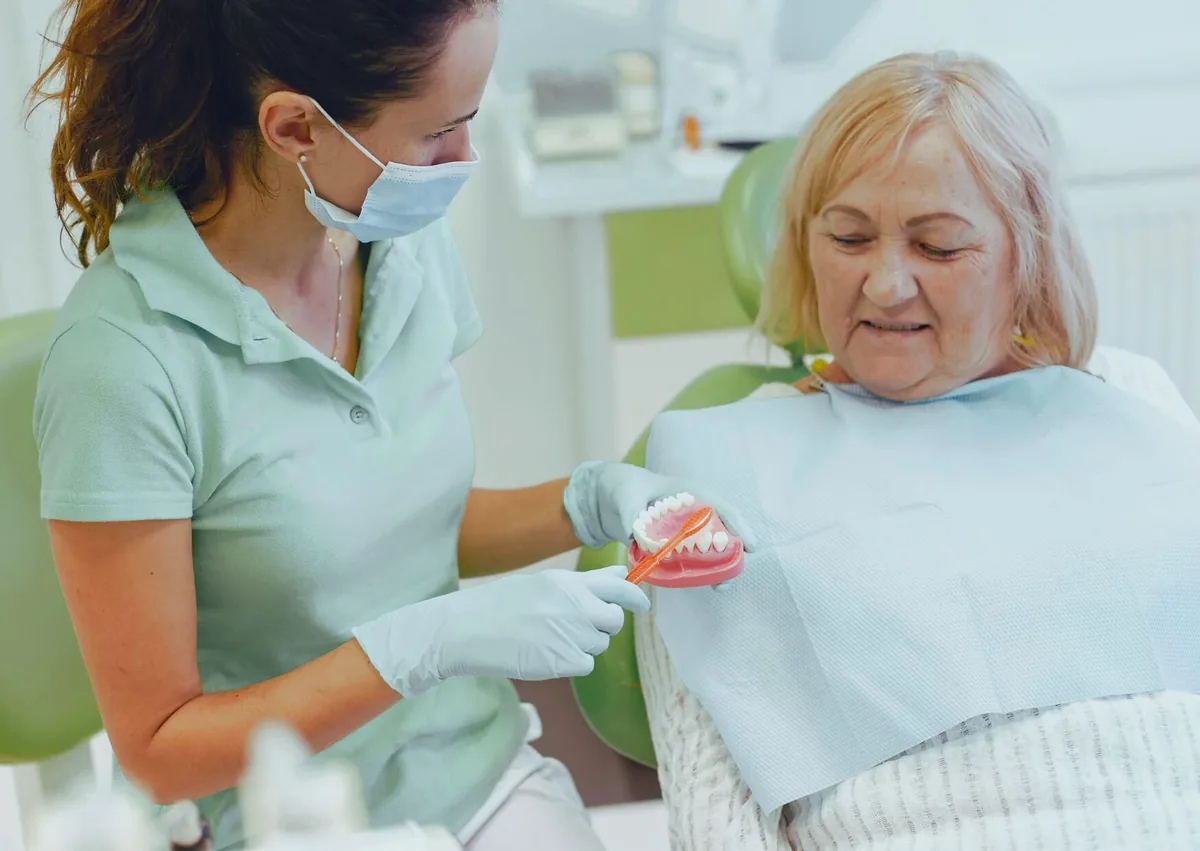
Clean removable dentures every day with a soft denture brush and a cleaner made for dentures. Regular toothpaste can be too abrasive, and hot or boiling water can warp the base.
Handle dentures over a folded towel or a sink filled with water so they are less likely to break if dropped. Unless your dentist tells you otherwise, remove removable dentures overnight and store them as directed so they do not dry out or lose shape.
Clean your gums, tongue, and any remaining teeth every day. Keep regular dental cleanings so a dentist can check the fit, examine the mouth, and catch problems early.
Contact a dentist if you have persistent pain, recurring sores, bleeding, swelling, a broken denture, or a sudden change in fit. Any mouth ulcer, red or white patch, lump, or unexplained irritation lasting longer than two weeks should be evaluated, even if it does not hurt.
Seek prompt care for severe or rapidly increasing swelling, fever with facial or oral swelling, uncontrolled bleeding, trouble swallowing, or difficulty breathing. Breathing problems or rapidly spreading swelling require emergency care.
Do not keep wearing a denture that causes severe pain, cuts tissue, or has a sharp broken edge. An exam can show whether a simple adjustment will help or whether the denture has reached the end of its practical lifespan.
If you are experiencing loose, painful, or heavily worn dentures, an in‑office evaluation can determine whether adjustment, repair, relining, or replacement will restore comfort and function. Call Charlotte Dental Associates for denture care in Charlotte, NC including locations near University City and University Place, or schedule an appointment at (704) 548-8563.
A denture can stay physically intact for 20 years, but that does not mean it still fits or works well. Changes in the jaw, gums, bite, and denture teeth often make replacement appropriate much sooner.
Many people with dentures should have them checked at least once a year. Some patients need more frequent visits, especially if they still have natural teeth, have implants, or develop sore spots.
Yes, sometimes. A denture can look fine but still have worn chewing surfaces, bite changes, or a poor fit that puts pressure on the gums.
No. Adhesive may help a properly fitted denture feel more stable, but it should not be used to manage a denture that is persistently loose or painful.