
We moved down the street! See You at our new location: 8401 University Executive Park Dr., Suite 120, Charlotte, NC 28262. Call now to schedule an appointment
A cracked tooth does not always have an obvious appearance. Sometimes it looks like a thin line in the enamel, which is the hard outer layer of the tooth. In other cases, the tooth may look normal even when a crack is present.
Some cracks show up as a faint vertical line, a rough or uneven edge, or a small split near a filling. A deeper crack may let part of the tooth shift slightly when you chew, but that movement is usually too subtle to see without a dental exam.
The short answer is this: a cracked tooth may be visible, but it is often felt more than seen. Pain when biting, sensitivity to cold, or a sharp twinge when you release pressure are often more useful clues than appearance alone. If cold sensitivity is your main concern, see our article on sensitivity to cold.
Charlotte Dental Associates in Charlotte, NC provides crowns & bridges to restore and protect cracked or weakened teeth.
A cracked tooth can cause symptoms that come and go. That pattern makes it easy to ignore at first, especially if the tooth still looks intact.
Common signs include:
Not every cracked tooth is painful. Small surface lines may cause no symptoms, while deeper cracks can irritate the pulp, the soft inner tissue that contains nerves and blood vessels. If the nerve may be exposed, read about an exposed tooth nerve.
If a crack is visible, it may look like a very fine line running up and down the tooth. Front teeth sometimes show shallow enamel lines called craze lines, which are tiny surface cracks that are often harmless and common with age.
A more concerning crack may look darker, deeper, or longer. You might also notice a small piece of tooth missing, a sharp edge, or a line that extends from the chewing surface toward the gumline.
Back teeth are harder to inspect at home. Lighting, saliva, and the angle of the tooth can hide a crack, so a normal-looking tooth can still be cracked.
Many people notice faint lines in the enamel and assume the tooth is broken. Often, these are craze lines. They affect only the outer enamel and usually do not need treatment unless they are tied to cosmetic concerns or other damage.
A true structural crack goes deeper and may involve dentin, the layer under the enamel, or even the pulp. These cracks are more likely to cause pain, sensitivity, or a higher risk of infection.
A useful rule is this: a visible line without symptoms may be minor, but pain with chewing deserves an exam. Appearance alone does not reliably show how deep the damage goes. Small cracks or chips can sometimes be smoothed and repaired with dental fillings.
Teeth can crack for several reasons. A common cause is heavy biting force, especially on hard foods like ice, popcorn kernels, or hard candy.
Other common causes include:
Cracked teeth are often found in back teeth because they take repeated chewing pressure over time. The tooth may weaken gradually before symptoms start.
Diagnosing a cracked tooth can be difficult. Some cracks are too small or too deep to show clearly on a standard X-ray.
A dentist may use magnification, a bright curing light, bite tests, and a careful exam of the tooth and surrounding gum. In some cases, the tooth is checked after an old filling is removed because the crack is hidden underneath. Learn more about diagnosing a cracked tooth.
X-rays are still useful, but often for finding related problems rather than the crack itself. They may show bone loss, an abscess, or changes near the root if the crack has affected the nerve or extended below the gumline. If infection is a concern, see infected tooth appearance.
Treatment depends on the location, depth, and direction of the crack. A small crack limited to enamel may only need monitoring or smoothing if there is a rough edge.
If the tooth is structurally weakened, a crowns & bridges treatment may help hold the tooth together and reduce stress during chewing. If the pulp is inflamed or infected, a root canal may be needed before the tooth is restored. Our guide, Signs You Need A Root Canal explains common warning signs.
Some cracks extend below the gumline or split the root. Those teeth are harder to save, and tooth extractions may be the safest option in some cases. That is why early evaluation matters.
If you think a tooth may be cracked, try to chew on the other side until it is checked. Avoid very hard, sticky, or extremely cold foods if they trigger pain.
Keep the area clean with normal brushing and flossing unless floss catches sharply on a broken edge. If that happens, stop and mention it during the visit.
Do not keep testing the tooth by biting on it. Repeated pressure can worsen the crack or increase inflammation. If cost or coverage is a concern, the practice accepts Medicaid for eligible services; see Medicaid info.
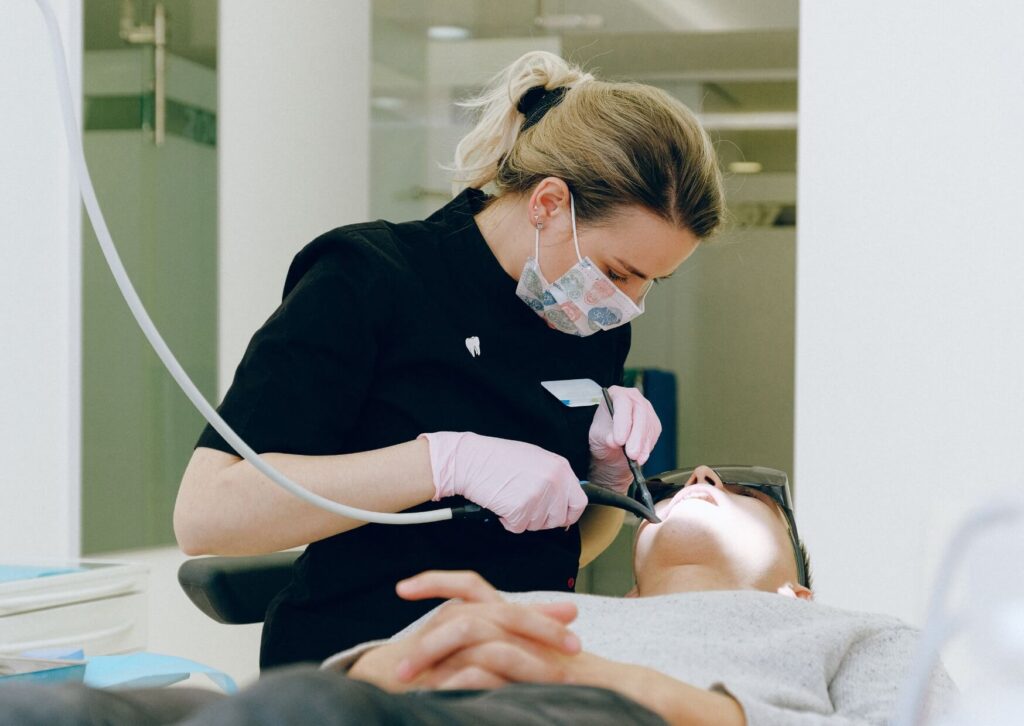
Some symptoms should not wait. Seek prompt dental care if you have swelling, severe pain, or a tooth that looks split or loose.
Urgent evaluation is also important if pain wakes you from sleep, the tooth hurts without chewing, the gum develops a pimple-like bump, or the tooth suddenly becomes very sensitive to heat. These signs may suggest nerve involvement or infection.
If facial swelling, fever, or trouble swallowing develops, seek urgent medical or dental attention right away. Those symptoms can signal a spreading infection and need timely care.
If you notice a line in a tooth and are not sure whether it is harmless, a dental exam is the safest next step. A quick evaluation can often tell the difference between a minor enamel line and a crack that needs treatment before it worsens.
Charlotte Dental Associates in Charlotte, NC provides crowns & bridges to restore cracked teeth; call (704) 548-8563 to schedule. We also serve patients from Concord and Matthews.
No. Tooth structure does not heal the way skin or bone can. Symptoms may settle down for a while, but the crack itself does not repair naturally.
No. Many cracked teeth are hard to see at home. Some are only found during a dental exam because the main clues are pain patterns and sensitivity.
A chipped tooth usually means a piece has broken off the surface, often near an edge. A cracked tooth means a line or split extends through the tooth structure and may go deeper than what is visible.
Usually not. Craze lines are tiny surface lines in the enamel and are often harmless. A deeper crack is more likely to cause pain, sensitivity, or structural weakness.
It is better to avoid chewing on that side until a dentist checks it. Continued pressure can make the crack worse, especially in a back tooth.