
We moved down the street! See You at our new location: 8401 University Executive Park Dr., Suite 120, Charlotte, NC 28262. Call now to schedule an appointment
The first signs of gingivitis are often easy to ignore. You may notice a little pink in the sink, tenderness along the gumline, or a metallic taste after brushing.
Even when it starts quietly, gingivitis is a clear sign that the gums are inflamed. The good news is that early gingivitis can often be reversed with steady home care and, when needed, professional treatment.
If you are wondering how to fix gingivitis, the answer is usually straightforward. Remove plaque thoroughly every day, and have tartar removed professionally if it has already formed.
Charlotte Dental Associates offers dental cleanings and preventive care in Charlotte, NC and provides the kind of cleaning and preventive support you may be looking for.
Gingivitis is the earliest stage of gum disease. It means the gums are inflamed, but the deeper tissues and bone supporting the teeth may not yet be permanently damaged.
That matters because gingivitis is often reversible at this stage. Early treatment is usually simpler, more comfortable, and more effective than waiting.
Healthy gums often look firm and fit closely around the teeth. With gingivitis, they may look redder, puffier, smoother, or more swollen than usual, and they may bleed when you brush or floss.
Bad breath is also common. Some people notice tenderness, mild soreness, or a heavy feeling in the gums.
The most common cause is plaque left along the gumline. Plaque is a sticky film of bacteria and food debris that irritates the gums when it is not removed well.
Over time, plaque can harden into tartar, also called calculus. Tartar cannot be removed at home, and its rough surface makes it easier for more plaque to collect.
Some people are more likely to develop gingivitis even with decent home care. Smoking, dry mouth, crowded teeth, mouth breathing, hormonal changes, diabetes, certain medications, and poorly fitting dental work can all raise the risk.
Changes in routine can also play a role. Stress, illness, travel, braces, or a new retainer can make cleaning less effective for a while.
The most reliable treatment is to remove what is causing the inflammation. In practical terms, that means removing plaque every day and removing tartar professionally when it is present.
For many people, the best plan has two parts. First, improve brushing and flossing so the gumline is cleaned thoroughly. Second, schedule a dental exam and cleaning so hidden buildup and problem areas can be addressed.
If tartar has formed or the inflammation is not improving, consider tooth scaling, often described as periodontal scaling to remove hardened deposits below the gumline.
Brushing harder is not the answer. Brushing more carefully and more consistently is what usually helps.
Use a soft-bristled toothbrush and clean where the tooth meets the gum. Gentle, short strokes usually work better than aggressive scrubbing.
Clean between the teeth every day. Floss, interdental brushes, or other dentist-recommended tools can remove plaque from places a toothbrush cannot reach.
If your gums bleed when you floss, that does not always mean you should stop. Bleeding often reflects existing inflammation, though severe pain, heavy bleeding, or uncertainty should lead to a dental evaluation.
An antiseptic or fluoride rinse may help in some cases, but mouthwash does not replace brushing and flossing. Plaque still has to be physically removed.
A dentist or dental hygienist will usually check for swelling, bleeding, plaque, tartar, and pocketing around the teeth. A periodontal probe is a small measuring tool used to check the space between the tooth and gum.
If the problem is limited to gingivitis, a dental cleaning is often the key next step. It removes plaque and tartar above and slightly below the gumline, giving the gums a chance to heal (read more about professional dental cleanings).
If there are signs of deeper disease, the treatment plan may change. Periodontitis can involve loss of bone and attachment around the teeth.
Many people notice less bleeding and tenderness within one to two weeks of better plaque control. Improvement can happen fairly quickly, especially when the problem is caught early.
Healing time depends on how inflamed the gums were to begin with and whether tartar is present. If you want a better sense of what to expect from one appointment, see our note on cleaning duration.
If symptoms are not improving after a couple of weeks of careful home care, something may be getting in the way. Common reasons include tartar buildup, cleaning technique, crowded teeth, mouth breathing, or a deeper gum problem.
Persistent bleeding gums should not be brushed off as normal. Healthy gums generally do not bleed with routine cleaning.
Not every sore or bleeding gum problem is simple gingivitis. Some symptoms suggest a more advanced infection or a different oral condition.
Watch for gum recession, loose teeth, pus, or a persistent bad taste. These can point to periodontitis, a dental abscess, or another problem that needs prompt professional care, and they can lead to exposed tooth roots.
Other warning signs include pain when biting, a tooth that feels taller than the others, swelling in one specific area, or a sore that does not heal. White patches, ulcers, or widespread mouth irritation may also have causes unrelated to plaque alone.
Gingivitis itself is usually not a dental emergency, but complications can be. Seek urgent care if you have facial swelling, fever, pus, severe throbbing pain, trouble swallowing, or difficulty opening your mouth.
Those symptoms can suggest a spreading infection. That is not something to watch casually at home.
Bleeding that is heavy, hard to stop, or linked to trauma also needs prompt evaluation. The same is true if the gums become suddenly painful and ulcerated, especially after illness or major stress.
One common mistake is stopping flossing because the gums bleed. With mild gingivitis, gentle daily cleaning between the teeth is often part of what helps the bleeding stop.
Another mistake is relying on mouthwash alone. A rinse may freshen the mouth, but it cannot remove plaque stuck to the teeth.
Some people also start brushing too hard in an effort to clean better. That usually makes irritated gums feel worse.
Skipping the dental visit is another common delay. If tartar is present, home care may help only partway because the rough deposits remain in place.
Cost concerns can delay care too. See our Medicaid info to learn more about coverage options.
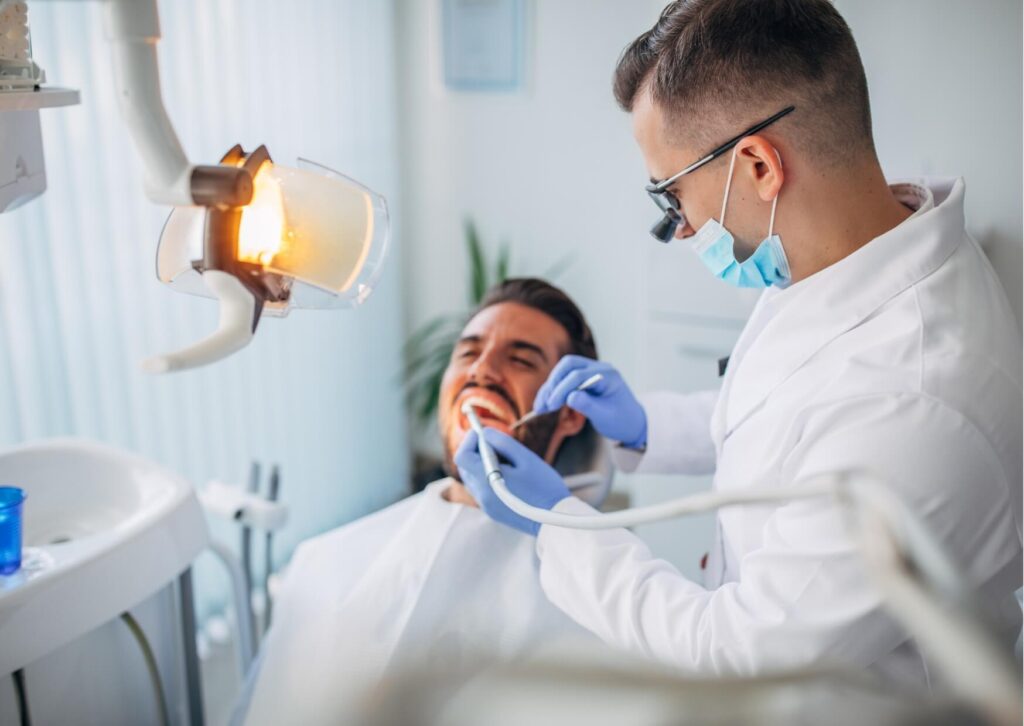
A dental exam for gingivitis is usually simple, but it can reveal more than many patients expect. The pattern of inflammation matters.
If redness and bleeding are mostly along the gumline throughout the mouth, plaque-related gingivitis is likely. If one area is much worse than the rest, a local issue such as tartar, trapped food, a rough filling edge, or an early abscess may be involved.
Dentists also check how the gums fit around the teeth, whether there is recession, and whether the supporting bone may be affected. Dental X-rays may be used if deeper disease is suspected.
In many cases, yes. When the problem is limited to gingivitis and there has not been permanent damage to the supporting tissues, the gums can often return to health.
That does not happen on its own. The gums heal because the bacterial buildup is reduced and the irritation stops.
This is the practical difference between gingivitis and periodontitis. Gingivitis is often reversible, while periodontitis can usually be managed but does not simply reverse on its own.
Brush twice a day and pay close attention to the gumline. Clean between the teeth once a day using a method you can do correctly and consistently.
Replace worn toothbrush heads and keep dental appointments on schedule. If a retainer, aligner, bridge, or crowded teeth make cleaning harder, ask for a demonstration instead of guessing.
Small technique changes often matter more than buying more products. A few minutes of careful plaque removal each day can make a real difference.
The mouth can recover well when irritation is removed early. If bleeding, swelling, or tenderness has become part of your routine, a dental exam can help you find out whether this is simple gingivitis or something deeper.
Charlotte Dental Associates provides dental cleanings in Charlotte, NC and nearby Concord and Matthews; call (704) 548-8563 to schedule an exam and cleaning.
Healing gums usually bleed less, feel less tender, and look less swollen over time. If there is no clear improvement after one to two weeks of good home care, a dental visit is a sensible next step.
Sometimes mild gingivitis improves with better brushing and cleaning between the teeth. If tartar is present, a professional cleaning is often needed because tartar cannot be removed at home.
In many cases, yes, as long as flossing is gentle. Bleeding often reflects inflammation, but severe pain, heavy bleeding, or uncertainty should be assessed by a dentist.
It may stay mild for a while, or it may progress to a deeper gum disease called periodontitis. That can lead to gum recession, bone loss, and loose teeth.
Usually not, but some symptoms need urgent care. Facial swelling, fever, pus, severe pain, or trouble swallowing can signal a more serious infection.