
We moved down the street! See You at our new location: 8401 University Executive Park Dr., Suite 120, Charlotte, NC 28262. Call now to schedule an appointment
A child’s first tooth can feel almost ceremonial. One day the gums are smooth and quiet, and then a pale edge appears, as if the body has opened a tiny white door. That moment often brings a practical question with surprising weight: when should I take my child to the dentist?
The short answer is earlier than many people expect. Most dental guidelines recommend a first dental visit by the first birthday, or within 6 months after the first tooth erupts, whichever comes first. That timing is not about rushing a child into treatment. It is about catching patterns early, before pain, decay, or feeding problems have a chance to settle in.
At Charlotte Dental Associates in Charlotte, NC, early visits focus on prevention, gentle exams, and guidance for parents. These appointments help establish healthy habits and provide dental cleanings and preventive care for growing smiles.
Baby teeth are temporary, but they are not trivial. They help with chewing, speech development, jaw growth, and holding space for adult teeth. When decay affects primary teeth early, it can disturb sleep, feeding, comfort, and, in some cases, the path of future dental development.
An early visit gives a dentist the chance to look at eruption patterns, gum health, oral habits, and cavity risk. It also gives caregivers a place to ask about bottles, breastfeeding, pacifiers, thumb sucking, fluoride, and brushing. This is one of the most useful visits in dentistry because it often prevents problems rather than reacting to them; many families begin with an exam and a focus on dental cleanings and home care.
A dentist may also identify early childhood tooth decay, a fast-moving form of decay that can begin soon after teeth appear. In the beginning, it may look like white spots near the gumline rather than obvious holes. That subtle stage is exactly why early checks matter. For more detail on early changes, see signs of a cavity.
If a child has a tooth, that tooth can be examined. You do not need to wait until all the baby teeth come in, and you do not need to wait for a problem. For most families, the right window is:
Some parents are told to wait until age 2 or 3. That advice is still common in casual conversation, but it is later than ideal for many children. By that age, a child may already have several teeth, established habits, and, in some cases, early decay that has been painless and easy to miss.
If the first tooth appeared very early, the first dental visit may also happen earlier than expected. That is normal. The calendar should follow the teeth, not the other way around.
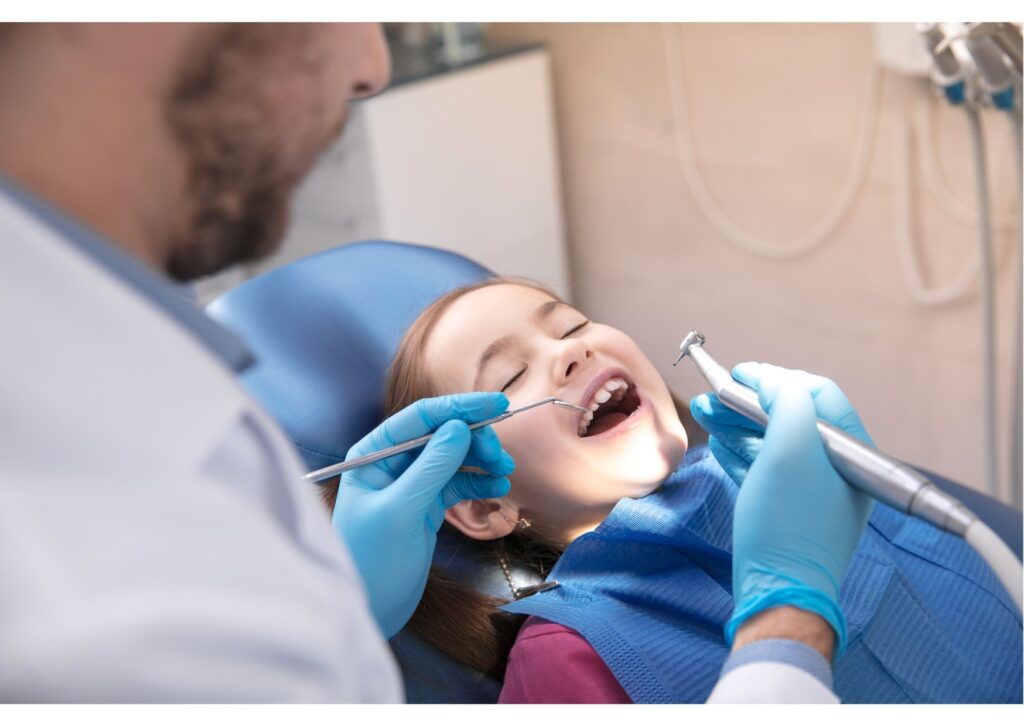
The first appointment is usually brief, gentle, and focused on examination and prevention. In many offices, a young child sits on a caregiver’s lap while the dentist looks at the teeth, gums, bite, tongue, and oral tissues. The goal is not to force a long procedure. The goal is to assess health, reduce fear, and build familiarity.
The dentist may check for:
A cleaning may be done if the child tolerates it, but the exact flow depends on age, temperament, and what the mouth shows. Families are often surprised by how much useful information can come from a short exam.
This is also the visit where home care gets adjusted to the child’s real risk factors. A child who falls asleep with milk in a bottle, snacks frequently, or has visible plaque may need closer follow-up than a child with lower cavity risk.
Sometimes the question is not whether a child needs a dentist by age 1. It is whether a child needs one this week. Certain symptoms deserve earlier evaluation because they may point to decay, infection, trauma, or developmental issues.
Book a dental visit sooner if you notice:
One of the most important urgent red flags is facial swelling, especially if it is increasing or accompanied by fever, lethargy, or trouble eating and drinking. That can signal infection and should be assessed promptly. If there is trouble breathing, trouble swallowing, or rapidly spreading swelling, seek urgent medical care immediately.
Dental trauma also deserves quick attention. A toddler slipping on a hardwood floor, hitting a coffee table, or falling on a playground can injure baby teeth in ways that are not always obvious at first glance.
Dental disease in children is not always loud. Sometimes it appears as a child rubbing the face during meals, waking more often at night, avoiding cold foods, or becoming irritable during brushing. A child may not have the words to say, “this tooth hurts,” but the body often tells the story anyway.
Decay often begins quietly. The earliest visible change may be a dull white band near the gums. Later, that area may darken, roughen, or break down into a cavity. Once decay reaches deeper layers of the tooth, pain can become more pronounced, and infection becomes more likely.
The inside of a tooth contains the pulp, which is the soft tissue with nerves and blood vessels. When disease reaches that space, the pain can become throbbing, sleep-disrupting, and difficult for a young child to localize. That is one reason dentists prefer to find problems before they become emergencies. Treatment for cavities can include dental fillings or other procedures depending on how far the decay has progressed (learn about composite fillings).
Childhood is full of motion, and teeth are often caught in it. A fall from a couch, a collision at daycare, a swing, a scooter, a bathtub slip, or a toy thrown at just the wrong angle can all injure the mouth. The scene is often brief and startling: blood mixing with saliva, a lip swelling quickly, a tooth that suddenly looks shorter, crooked, or sharp.
Even when the bleeding stops, a dental check may still be important. Baby teeth can loosen, intrude into the gums, fracture, or affect the developing adult tooth underneath. A dentist can determine whether the injury is superficial or whether monitoring and treatment are needed.
Seek prompt dental or medical evaluation if there is:
If there was loss of consciousness, vomiting, unusual sleepiness, or concern for head injury, medical evaluation takes priority. Teeth matter, but airway and brain symptoms matter more.
It is easy to dismiss baby teeth because they eventually fall out. But the mouth is not a disposable draft. Primary teeth guide chewing, support clear speech, help maintain nutrition, and preserve space for the adult teeth that are still forming in the jaw.
When a child loses a baby tooth too early because of decay or infection, the neighboring teeth can drift. That movement may contribute to crowding or eruption problems later. Not every early loss causes a major orthodontic issue, but the risk is real enough that prevention is worth taking seriously.
There is also the human side of it. A painful mouth changes behavior. It can disturb sleep, make meals stressful, and turn brushing into a nightly struggle. In a small child, those effects ripple through the whole household.
After the first visit, many children are seen every 6 months. That interval is common, but it is not a rule for every child. Some need more frequent follow-up because of cavity risk, enamel defects, medical conditions, oral habits, or a history of trauma.
A dentist may recommend closer monitoring if there are early signs of decay, heavy plaque buildup, frequent sugary exposures, dry mouth, or developmental concerns. On the other hand, a child with low risk and stable findings may simply continue with routine preventive care.
This is a good example of the difference between general education and personal advice. General timelines are helpful, but the right recall schedule should come from a dentist who has actually examined the child.
Before the first dental visit, simple habits matter more than elaborate ones. Clean the teeth gently as they erupt, keep an eye out for color changes or rough spots, and avoid letting sugary liquids bathe the teeth for long periods, especially during sleep. Water is kinder to teeth than juice, sweetened milk drinks, or frequent sipping from cups that stay in use all day.
It also helps to make the dental visit feel ordinary rather than dramatic. A calm explanation, a morning appointment when possible, and realistic expectations often work better than promising a perfect experience. A child does not need to perform. The visit only needs to begin.
If brushing has become difficult because the child resists, cries, or seems uncomfortable, mention that at the appointment. Sometimes the issue is behavioral. Sometimes it is sensory. Sometimes it is the first clue that the mouth is tender or that plaque has been collecting in hard-to-reach areas. If cost or coverage is a concern, review our Medicaid info to see what may be available for your family.
Ready to begin with a gentle preventive visit in Charlotte, NC? Call Charlotte Dental Associates at (704) 548-8563 to schedule an exam and dental cleanings. We welcome families from nearby towns and often have same-day openings.
| Situation | General Guidance |
| First tooth has erupted | Schedule a dental visit within 6 months |
| Child is approaching age 1 with or without many teeth | Book the first dental visit by the first birthday |
| No symptoms, normal feeding, no visible concerns | Routine first visit is still recommended |
| White or brown spots on teeth | Arrange an earlier dental evaluation |
| Fall, chipped tooth, or tooth pushed out of position | Contact a dentist promptly |
| Facial swelling, fever, trouble swallowing, or trouble breathing | Seek urgent care immediately |
The table is a guide, not a substitute for examination. If something feels off, especially pain, swelling, or injury, it is reasonable to call a dental office even if the timing does not fit neatly into a chart.
There is something humbling about how much can depend on structures so small. A few millimeters of enamel, a gumline barely visible in a squirming toddler, a pale spot that looks insignificant in the bathroom mirror. Yet from those details come comfort or pain, restful sleep or broken nights, ease at the table or refusal to eat.
Dentistry, at its best, notices the fragile things before they fracture. It reads the mouth the way a careful reader studies a page, aware that tiny marks can change the whole meaning. In that sense, the first dental visit is not merely a date on a calendar. It is an early act of stewardship.
So if the question is when should I take my child to the dentist, the most reliable answer is this: by age 1, within 6 months of the first tooth, and sooner if anything looks painful, damaged, swollen, or unusual. Small teeth arrive quietly. Problems often do too.
At Charlotte Dental Associates, we understand how important early care is for your child’s comfort and long-term oral health. Our team provides gentle exams, preventive guidance, and dental cleanings tailored to young patients in Charlotte, NC and nearby communities.
If you are wondering when you should take your child to the dentist, this is the right time to start. Call (704) 548-8563 to schedule your child’s first visit and give them a healthy, confident start.
No. If a tooth has erupted, a dental visit can be appropriate. The first visit is often simple and focused on prevention, growth, and risk assessment.
No. Waiting for all baby teeth is usually later than recommended. Early visits help identify decay risk and developmental concerns before they become harder to manage.
Many children erupt teeth on a normal but variable timeline. It is still reasonable to discuss this with a dentist or pediatric clinician, especially if eruption seems significantly delayed or there are other developmental concerns.
Often, yes. Baby teeth help with eating, speech, comfort, and guiding adult teeth into position. Untreated decay can lead to pain, infection, and early tooth loss.
Urgent evaluation is needed for facial swelling, fever with dental pain, trauma that changes tooth position, uncontrolled bleeding, or difficulty swallowing or breathing. If breathing or swallowing is affected, seek immediate medical care.