
We moved down the street! See You at our new location: 8401 University Executive Park Dr., Suite 120, Charlotte, NC 28262. Call now to schedule an appointment
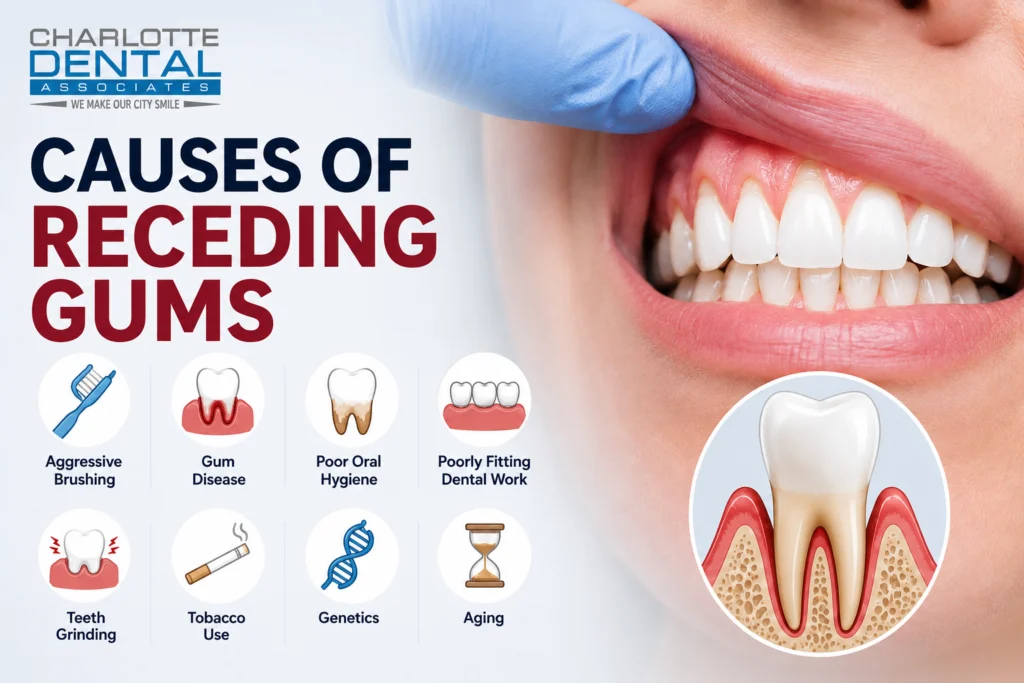
Receding gums commonly develop from repeated pressure, gum inflammation, tissue changes, or oral health conditions that gradually expose more tooth structure. Gum recession may occur slowly and may become more noticeable when teeth appear longer, sensitivity develops, or gum lines change. At Charlotte Dental Associates, patients with gum concerns frequently begin with Tooth Scaling because early evaluation and deep cleaning approaches may help identify conditions affecting gum health. Based on the practice's family-focused and preventive approach, identifying underlying causes often supports more personalized care planning.
What it is:
Loss of gum tissue around teeth that exposes additional tooth structure or root surfaces.
Who it is for:
Adults with gum inflammation, aggressive brushing habits, grinding behaviors, periodontal concerns, or age-related tissue changes.
Main benefits of identifying causes early:
Limitations:
Timeline / durability:
Gum recession commonly develops gradually over months or years depending on inflammation levels, habits, and oral conditions.
Receding gums commonly develop because repeated stress or inflammation gradually affects gum attachment around teeth.
Several conditions may contribute to tissue changes instead of one isolated cause.
Cause → effect → solution commonly follows:
Plaque buildup → gum inflammation → tissue irritation → periodontal evaluation
Examples include:
If several contributing factors occur together, then treatment recommendations may depend on gum condition and oral findings.
The National Institute of Dental and Craniofacial Research oral health resources explains that gum conditions may gradually affect supporting tissues and oral health over time.
Gum disease commonly contributes to receding gums because inflammation may weaken supporting tissues surrounding teeth.
Bacterial buildup and prolonged inflammation may affect attachment levels over time.
Common gum disease contributors include:
Examples include:
Cause → effect → treatment pathway commonly follows:
Bacteria accumulation → inflammation → tissue breakdown → periodontal care discussion
Patients experiencing signs of inflammation sometimes review Affordable Dental Cleanings and Prevention because preventive care may help support long-term gum health.
Aggressive brushing commonly contributes to gum recession because repeated friction may place stress on soft tissue margins.
Brushing force and toothbrush type may influence gum tissue response.
Common brushing-related factors include:
Examples include:
Cause → effect → solution commonly follows:
Repeated friction → tissue irritation → gum reduction → brushing modification discussion
If brushing habits repeatedly stress gum tissue, then technique adjustments may become helpful.
Teeth grinding may contribute to receding gums because repeated force can increase stress around supporting structures.
Pressure patterns and clenching behaviors sometimes affect surrounding tissues.
Common grinding-related factors include:
Examples include:
Cause → effect → solution commonly follows:
Grinding activity → force concentration → tissue stress → bite assessment discussion
Patients with bite-related symptoms sometimes review Dental Bridges and Crowns because bite relationships and restoration conditions may influence chewing forces.
Genetics may influence receding gums because inherited tissue characteristics can affect gum thickness, inflammation response, and long-term tissue stability.
Some individuals naturally have thinner gum tissue or anatomical traits that may make recession more noticeable over time. Genetic factors do not automatically cause recession, but inherited characteristics may influence how gums respond to irritation and pressure.
Common inherited factors include:
Examples include:
Cause → effect → solution commonly follows:
Inherited tissue traits → increased vulnerability → tissue stress response → preventive evaluation discussion
If family history includes gum disease or recession patterns, then preventive examinations and monitoring may help identify changes earlier. Patients with hereditary risk factors sometimes benefit from routine periodontal evaluations because tissue thickness and inflammation patterns may affect long-term gum health.
Tooth alignment may influence gum recession because uneven positioning sometimes changes pressure distribution across tissues.
Crowded teeth and bite irregularities may create localized stress.
Common alignment-related factors include:
Examples include:
Cause → effect → solution commonly follows:
Alignment changes → uneven force patterns → tissue stress → treatment discussion
If tooth position changes affect cleaning access or bite force, then recommendations may vary according to examination findings.
Receding gums commonly involve both oral conditions and daily habits.
| Factor | Dental Causes | Lifestyle Causes |
| Inflammation | Higher | Lower |
| Mechanical pressure | Moderate | Higher |
| Plaque involvement | Higher | Variable |
| Habit influence | Moderate | Higher |
| Prevention focus | Treatment-based | Behavior-based |
Examples include:
Patients requiring deeper cleaning approaches sometimes explore Tooth Scaling because treatment selection may depend on inflammation findings.
Receding gums commonly produce visible and sensitivity-related changes before severe symptoms develop.
Common signs include:
Examples include:
The American Dental Association information on gum health notes that gum changes and inflammation may affect surrounding tissues over time.
Receding gums do not commonly regrow naturally because tissue loss often depends on underlying causes and severity.
Stress itself may not directly cause recession, but stress-related grinding and clenching behaviors may increase pressure on supporting tissues.
Smoking may affect circulation and tissue response, which can influence long-term gum health.
Receding gums sometimes create sensitivity, although symptoms vary according to root exposure and inflammation levels.
Advanced tissue loss may affect supporting structures depending on severity and oral findings.
Gum recession commonly develops from inflammation, pressure habits, oral hygiene patterns, and structural changes affecting supporting tissues. Multiple contributing factors may occur together because gum health often depends on both tissue condition and daily habits.
If you are noticing sensitivity, visible gumline changes, or teeth appearing longer, an evaluation may help identify factors affecting tissue health. If this applies to your situation, recommendations often depend on inflammation levels, oral findings, and long-term priorities.
Charlotte Dental Associates can help evaluate gum concerns and discuss findings based on examination results and preventive goals. Request a consultation to evaluate your condition and better understand treatment options that may help support long-term gum health and tissue stability.